Hearing loss signs
Why the television sounds too loud to others
Find out why speech on the television becomes harder to follow than music, what gradual high-frequency loss does to consonants, and why a specialist measures your hearing before anyone talks about aids.
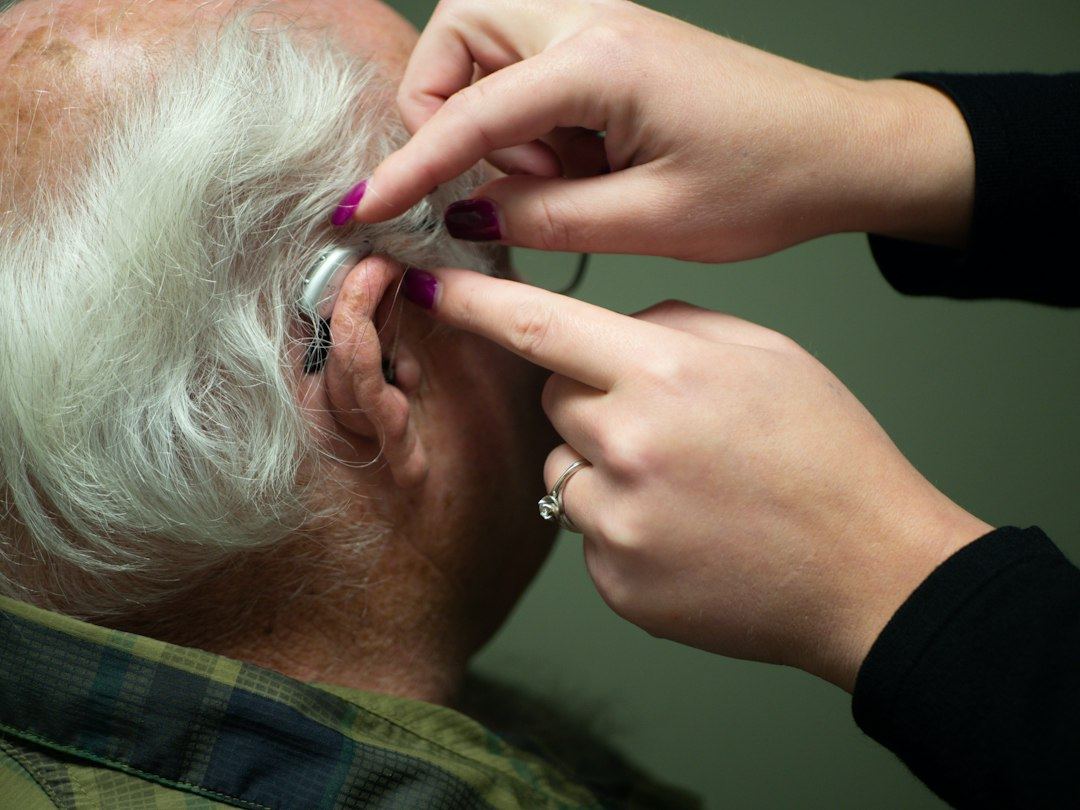
The first sign usually comes from someone else
You might not notice your own hearing changing. The person sitting next to you does. They hear the television at a volume that fills the room, while you are still straining to catch the words. This is how most people find out something has shifted.
It rarely happens overnight. The change is slow enough that you adjust to it, turning the volume up by one notch at a time. By the point someone mentions it, the gap between what you hear and what they hear has been widening for months or years.
That gap matters because it changes how a room feels. Others start leaving when you watch something. You might start watching alone, or with subtitles doing the work your ears used to do. Neither of those things means you have to accept it as permanent.
Why television speech is harder than music
A film soundtrack mixes dialogue with background noise, sound effects and music. Your brain has to separate the voice from everything else happening at once. That separation relies on hearing specific frequencies clearly.
Music tends to sit in lower and middle frequencies, which often hold up longer when hearing starts to fade. Speech depends heavily on higher frequencies. Consonants like t, s, f and th carry the meaning of a sentence, and they live in that upper range. When those sounds drop away, vowels still come through but the words blur together. You hear someone talking without catching what they say.
Television speakers are small and face the wall, so the sound bounces before it reaches you. That reflection strips away even more detail. A cinema uses large speakers aimed directly at the audience, which is why you might follow a film perfectly in the theatre and struggle with the same film at home.
What gradual high-frequency loss does to consonants
High-frequency hearing loss is the most common type in adults. It affects the tiny hair cells in the inner ear that respond to higher pitches. Those cells do not regenerate once damaged, so the loss accumulates over time.
Because consonants carry the distinction between similar words, losing them makes speech sound muffled rather than quiet. You can tell someone is speaking, but you cannot separate "sit" from "fit" or "thin" from "fin". The volume is there. The clarity is not.
This is why turning the television louder does not fix the problem. More volume amplifies everything equally. The low sounds get louder, the background noise gets louder, and the missing consonants stay missing. You end up with a noisier room and the same blurred dialogue. The issue is resolution, not loudness.
Why measurement comes before any talk of aids
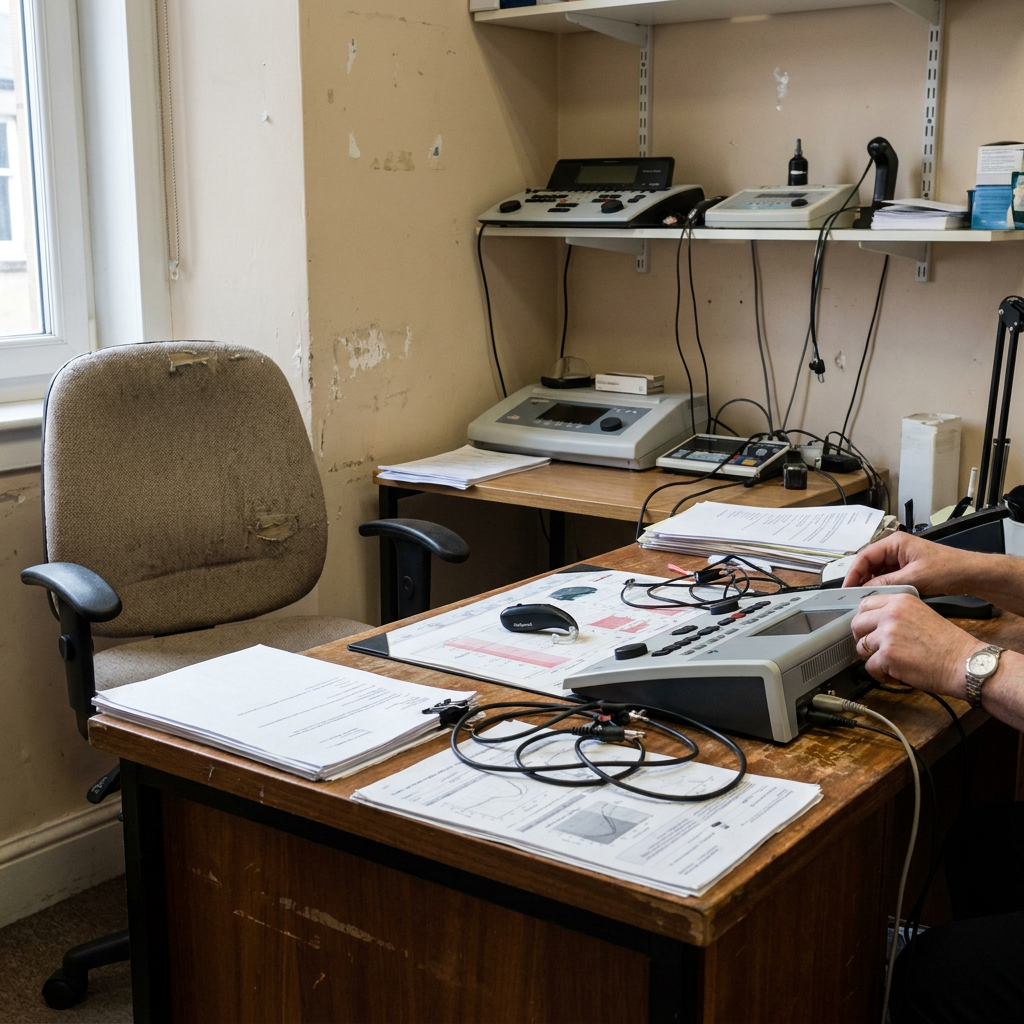
An audiologist takes measurements before discussing solutions because hearing loss varies widely between people. Two neighbours might both struggle with the television for completely different reasons. One might have lost high frequencies gradually. The other might have a wax blockage pressing against the eardrum.
A full hearing test maps exactly which frequencies have dropped and by how much. The audiologist plays tones across the audible range and records the softest level you detect at each pitch. That map determines whether an aid would help, what kind, and how it should be set.
Without that information, fitting a hearing aid is guesswork. Specialist firms in Glasgow use these measurements to programme devices that amplify only the frequencies you are missing, leaving the rest untouched. That precision is the difference between a device that clarifies speech and one that just makes everything louder.
Signs the television volume points to hearing loss
These are things you or the people around you might notice at home. They do not confirm hearing loss on their own, but they show where the difficulty sits.
- 1
Volume above thirty
Others in the room find the television uncomfortably loud while you feel it is still too quiet to follow the dialogue easily.
- 2
Subtitles always on
You rely on text to follow programmes you used to watch without reading the screen, especially news or drama.

- 3
Losing voices in crowds on screen
Background chatter in a scene drowns out the actors. Music comes through clearly but spoken words disappear into it.

- 4
Asking people to repeat themselves
You miss parts of conversations in the same room, particularly when the television is running or someone speaks softly.
Questions about television volume and hearing
Will turning the TV down damage my hearing further?
No. Listening at high volume does not cause the type of gradual loss linked to ageing. But sustained loud sound can contribute to noise-related damage over time, so keeping levels moderate is sensible.
Could ear wax be making the television hard to hear?
Yes. A wax build-up blocks sound physically, reducing clarity across all frequencies. An audiologist checks for this during a hearing test and can arrange removal if needed.
Do I need hearing aids if I only struggle with the TV?
Not necessarily. A hearing test shows whether the loss is significant enough to benefit from aids. Sometimes repositioning speakers or using a soundbar helps without any device in your ear.
Is this just a normal part of getting older?
High-frequency loss is common with age, but common does not mean you have to manage without help. Measuring the loss tells you exactly what support would change.
Can I test my own hearing at home first?
Phone apps give a rough idea but lack the calibration and controlled environment of a clinical test. An audiologist uses precise equipment to measure each frequency individually.
Find out what the volume difference means
Send an enquiry to book a hearing test in Glasgow. You will receive details of available appointments. It does not commit you to buying anything or starting treatment.
- No obligation to buy
- Measured results, not guesses
- Local appointments