Hearing difficulty
Why you cannot hear in noisy pubs
A busy pub exposes hearing changes that a quiet room hides. Find out why background chatter drowns out speech, what specific tests reveal, and what an audiologist might suggest next.
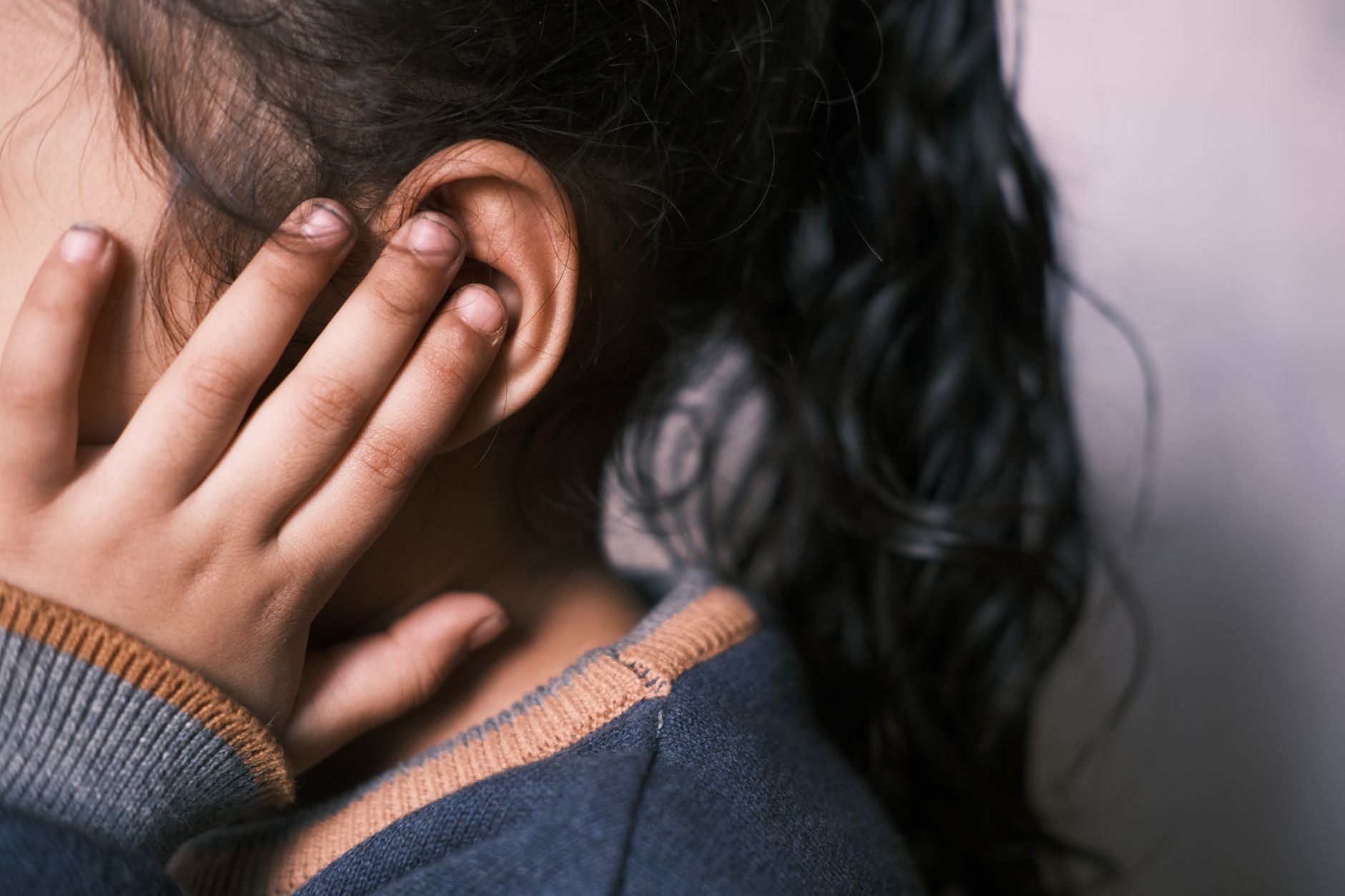
Why a loud room is the first place you notice it
You sit down with friends in a pub and realise you are nodding along without catching half of what anyone says. The music, the clinking glasses, the table next to you laughing, all of it blends into one wall of sound. You lean in, ask people to repeat themselves, or just smile and hope for the best.
This happens long before you struggle to hear someone talking in a quiet kitchen. A busy room demands more from your ears than silence does. When background noise rises, your auditory system has to separate the voice you want from everything else. If even a small amount of hearing sensitivity has dropped away, that separation becomes much harder work.
Many people assume their hearing is fine because they manage perfectly well at home. But a pub, a restaurant, or a crowded office forces the ear to do something extra. That extra effort is where the first signs usually show up.
How background chatter masks the words you need
Speech sounds occupy the same frequencies as most background noise. Vowels carry volume but consonants carry meaning, and consonants are quieter, shorter sounds. In a silent room, you catch every sharp t and soft s without thinking about it.
Add twenty other conversations, a television on the wall, and traffic outside, and those quiet consonants get buried. Your brain normally fills in the gaps using context. It predicts the word based on the sentence around it. But when the noise level climbs high enough, even that prediction fails. You hear someone talking, you know they are talking to you, but the actual words dissolve.
This masking effect hits certain pitches harder than others. High-frequency sounds, which give speech its clarity, are often the first to fade. So the person opposite you sounds like they are mumbling, even though they are speaking at a normal volume. The problem is not them, and it is not the pub being too loud. It is the gap between the signal you need and the noise competing with it.
What a standard tone test misses
Most basic hearing checks play a series of beeps through headphones. You press a button each time you hear one. This measures how quiet a sound can be before it disappears for you, tested in a soundproof booth with no distractions.
That result matters, but it only tells part of the story. A tone test checks whether your ear detects a single pitch in perfect silence. It does not check whether your brain can pull a voice out of a mess of overlapping sounds. Someone can pass a standard test comfortably and still struggle badly in a pub.
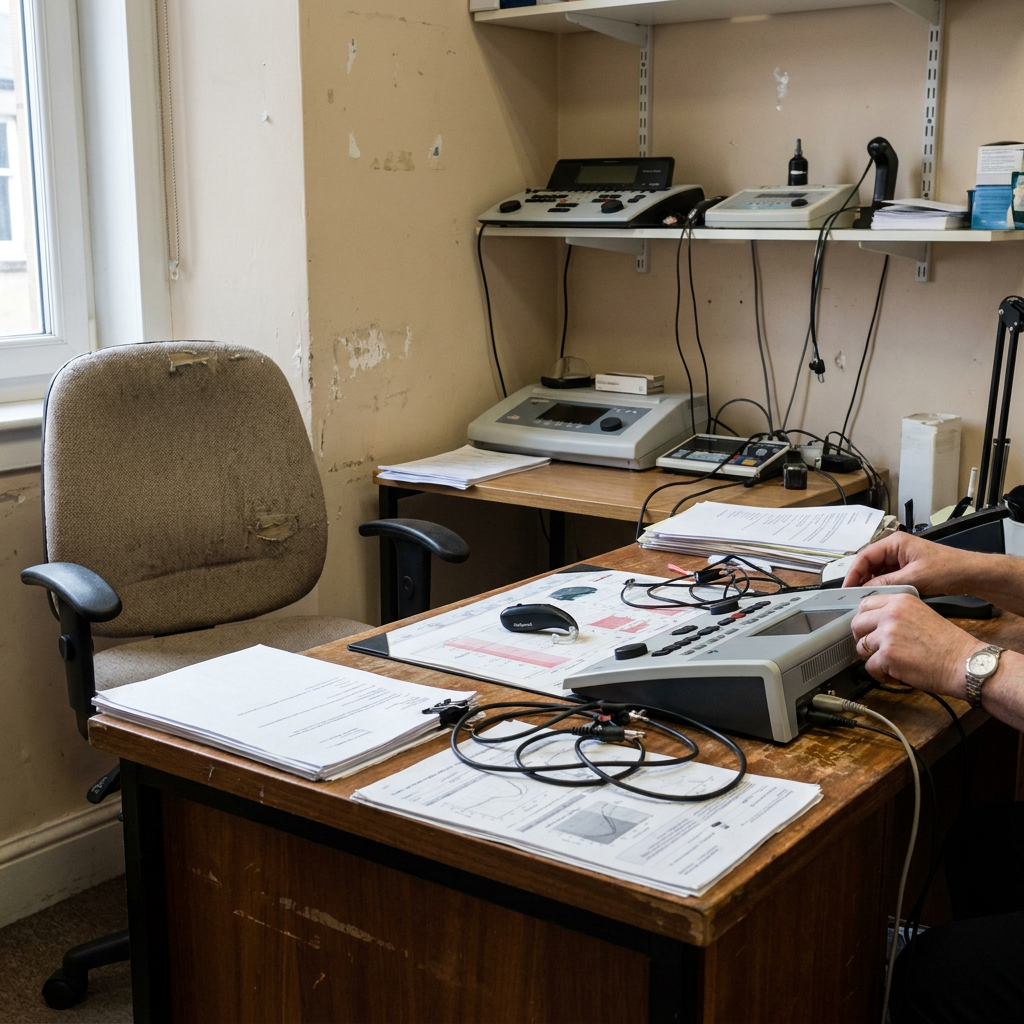
Because of this gap, audiologists use additional assessments designed specifically for noisy environments. These tests measure how well you process speech when competing noise plays at the same time. They look at the speed and accuracy of your listening under pressure, rather than just the faintest beep you can detect.
What speech-in-noise testing shows
During a speech-in-noise test, the audiologist plays recorded sentences while adding background noise, usually the sound of several people talking at once. You repeat back what you hear. The specialist gradually increases the noise level or decreases the volume of the target voice to find the exact point where understanding breaks down.
This reveals something a pure tone test cannot: how your auditory system handles competition. Two people might have identical tone test results but perform very differently here. One might follow the sentences easily while the other loses track quickly as the background chatter rises.
The outcome gives the audiologist a practical picture of what daily life actually sounds like to you. It moves beyond abstract decibel thresholds and shows how much effort you spend trying to follow a conversation. That information shapes whatever steps come next, because fixing the problem means addressing real situations, not just numbers on a chart.
Options an audiologist may discuss afterwards
Once the tests are done, the audiologist reviews what the results mean for your daily life. If wax buildup is contributing to the muffled feeling, removal might be the first step. Clearing the ear canal can change how much sound reaches the eardrum, sometimes making a noticeable difference straight away.
If the issue sits deeper, the specialist may talk about hearing aids designed specifically for noisy spaces. Modern devices do not simply make everything louder. They use directional microphones to focus on the person in front of you while reducing the noise coming from the sides and behind. Some process sound fast enough to suppress sudden bursts of background chatter before they reach your ear.
The audiologist explains what each option involves, how it fits into your routine, and what kind of improvement you can realistically expect. There is no single fix for every situation. The right approach depends on what the speech-in-noise test showed and where you spend most of your time listening.
I can hear at home but lose conversations in a crowd
Background noise competes with the voices you are trying to follow. When your ears stop separating the two cleanly, crowded rooms become exhausting and isolating.
- 1
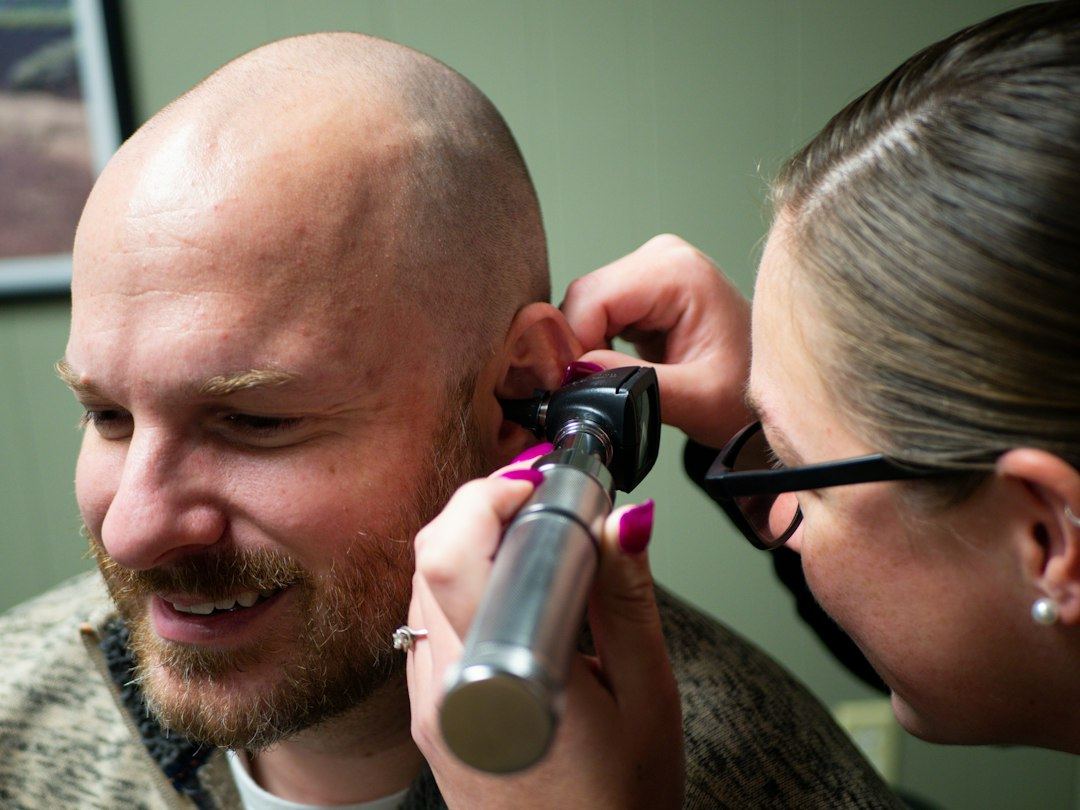
Asking people to repeat themselves
You frequently say pardon in busy places but rarely need to ask again at home. This suggests speech gets lost in competing noise.
- 2
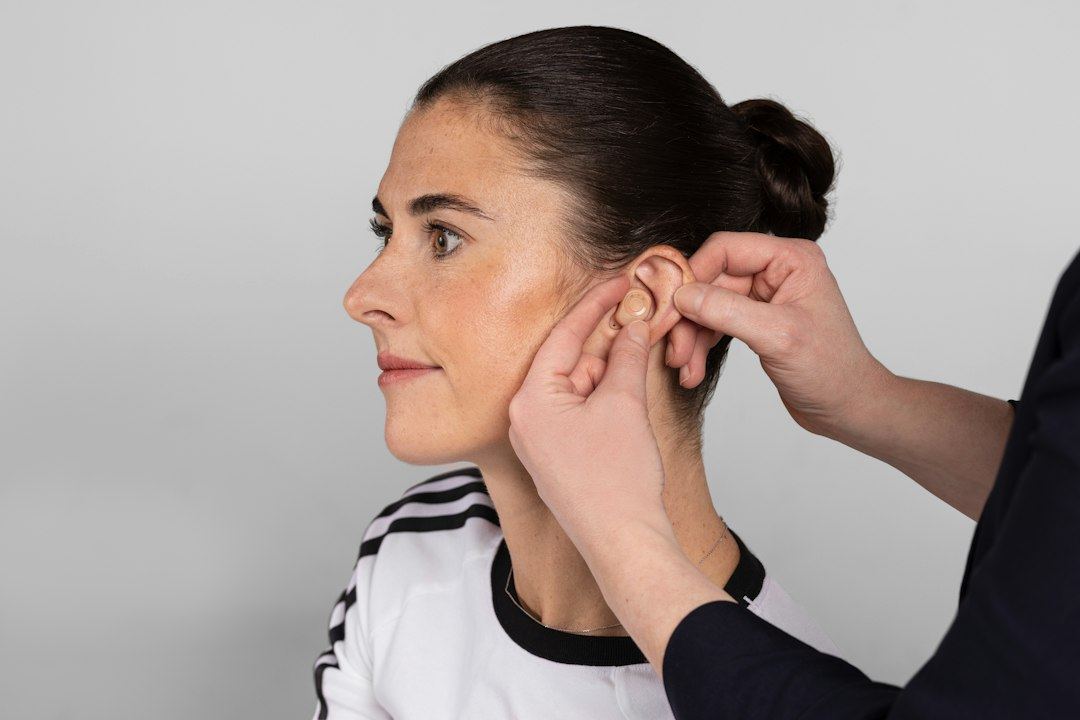
Watching lips instead of listening
You start reading mouths to fill in missing words. Relying on visual cues often means the audio signal is no longer clear enough alone.
- 3
Leaving noisy rooms early
Pubs or restaurants feel draining after twenty minutes. Avoiding loud spaces can be a response to the effort required to follow talk.
- 4
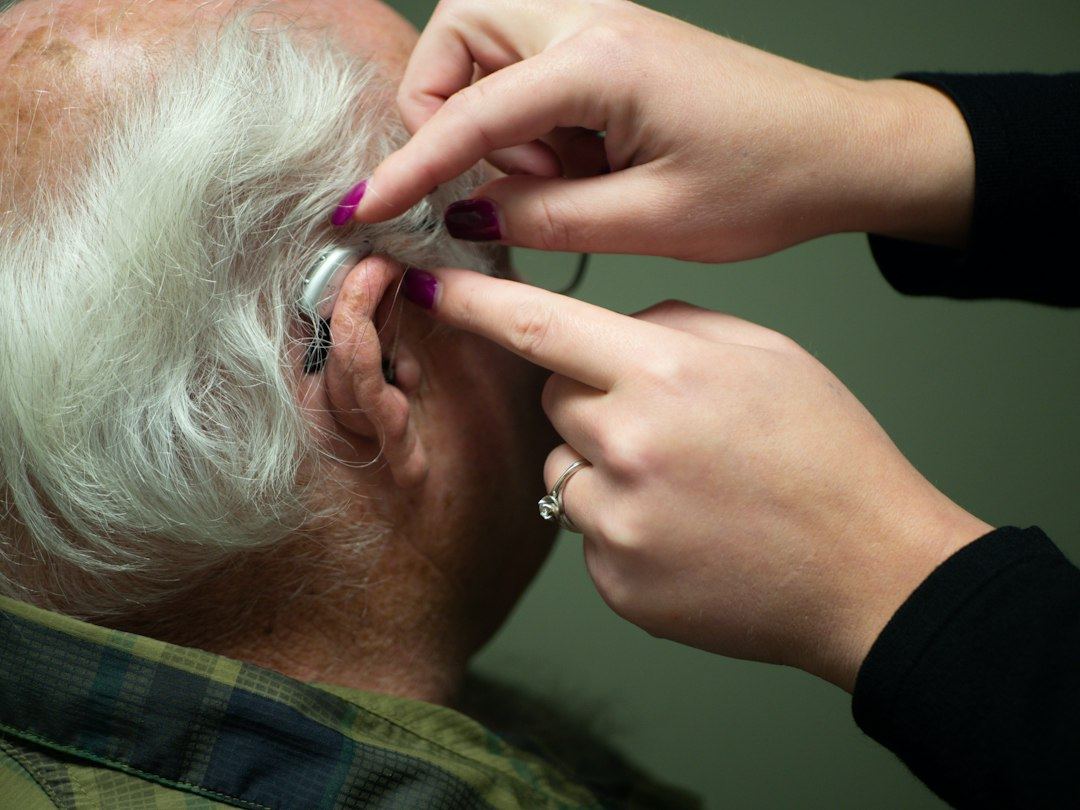
Turning towards the speaker
You angle your head so one ear points directly at the person talking. Positioning yourself this way compensates for fading clarity.
Questions about hearing in noise
-
Losing track of conversation in a noisy pub is often the first sign of hearing loss, long before you notice any difficulty listening in a quiet room at home.
- Is my hearing actually damaged?
- Not necessarily. Difficulty in noise can stem from mild changes, wax, or how the brain processes competing sounds.
- Will a hearing test hurt?
- No. The audiologist plays sounds through headphones and asks you to respond. Nothing enters the ear canal painfully.
- Do I need hearing aids immediately?
- Rarely. An audiologist reviews the full picture first and discusses options ranging from wax removal to targeted devices.
- Can ear wax cause this problem?
- Yes. A blockage reduces the sound reaching the eardrum, making it harder to pick out voices against background noise.
Find out what the noise is hiding
Send your details and an audiologist will arrange a consultation. You are not committing to treatment or buying anything by asking.
- No obligation to proceed
- Local Glasgow clinics
- Clear pricing upfront