Hearing guide
Mild hearing loss: do you need a hearing aid?
Find out what mild hearing loss actually means, how it changes the way you hear conversations at home and in busy Glasgow spots, and when an audiologist usually suggests trying a hearing aid.
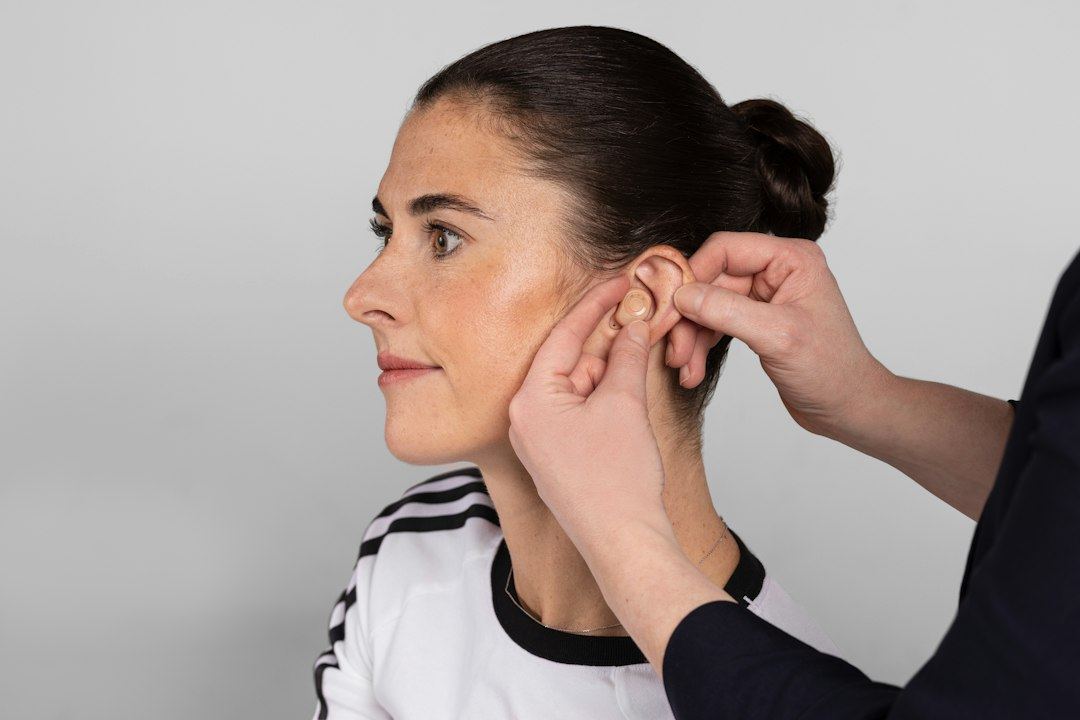
What mild hearing loss actually means
Hearing loss is measured in decibels. Mild hearing loss means you struggle to hear sounds below 25 to 40 decibels. That range covers rustling leaves, a ticking clock and the softer consonants in speech, like f, s and th.
You can still hear most of what people say in a quiet room. The problem starts when background noise enters the picture or when someone speaks softly from another room. You might assume people are mumbling more than they used to. They probably are not. Your ears are just missing the quieter parts of their words.
An audiologist measures this with a full hearing test. They play tones at different pitches and volumes through headphones and record the softest sound you catch each time. The results appear on a chart called an audiogram. Mild loss shows up as a dip on that chart, usually affecting higher pitches first. Those high pitches carry the details that make speech clear, so losing them makes conversations feel muddy even when the volume seems fine.
How it shows up around your home
The television is often the first thing people notice. You turn it up a few notches, then a few more, until someone else in the house mentions it is loud. You might find yourself reading lips without realising it, watching mouths move to fill in the words your ears miss.
Kitchens and hallways expose mild loss quickly. A tap running or a kettle boiling adds enough noise to mask a voice calling from the next room. You answer back with "what?" more often than you used to. Phone calls can be harder than face-to-face chats because there is no mouth to watch and no context to guess from.
These small frictions add up over a week. You start avoiding certain seats at the dinner table. You ask people to repeat themselves and feel awkward doing it. None of this means your hearing has failed. It means the margin between what you can hear and what you need to hear has narrowed. Read more about why the television might be getting louder.
Losing words in busy Glasgow spots
Pubs, cafes and shops on Sauchiehall Street or Byres Road are loud places. Crockery clatters, music plays, chairs scrape against floors. For someone with normal hearing, the brain separates a friend's voice from that mess almost instantly. With mild hearing loss, that separation takes effort.
You might follow a conversation perfectly in a quiet booth but lose the thread completely when the place fills up. You nod along instead of asking someone to repeat themselves for the third time. Leaving a busy cafe feeling drained is common. Your brain has been working overtime to piece together half-heard syllables into sentences all afternoon.
This fatigue is one reason people seek help long before they consider themselves hard of hearing. The problem is not silence. It is noise. If you regularly leave social outings tired, or avoid busy places altogether, your hearing may be the cause. Find out more about losing words in noisy pubs and cafes around the city.
When a hearing aid becomes worth considering
Audiologists do not prescribe hearing aids based solely on the numbers on an audiogram. They look at how much your daily life is affected. If you miss words occasionally but manage fine, a hearing aid might not be necessary yet. Regular tests will track whether things change.
But if you are withdrawing from conversations, turning down invitations to noisy places or feeling exhausted after a day of listening, those are reasons to act. A hearing aid amplifies the specific frequencies you struggle with rather than making everything louder. Modern devices also reduce background noise, which helps in the exact situations where mild loss causes the most trouble.
Sometimes the solution is simpler. A build-up of ear wax can mimic mild hearing loss by blocking sound before it reaches the eardrum. An audiologist checks for this during a standard appointment. If wax is the problem, microsuction clears it in minutes and your hearing returns to normal. If the loss is genuine, they discuss whether a device fits your routine.
Getting your hearing checked in Glasgow
A hearing test takes about half an hour. You sit in a quiet room, wear headphones and press a button each time you hear a tone. The audiologist records your responses and plots them on a chart. Afterwards, they walk you through what the results mean for your specific situation.
There is no pressure to buy anything. The appointment gives you facts. You learn which pitches you hear clearly and which ones slip past you. You find out whether wax, fluid or something else is involved. And you get a straight answer about whether a hearing aid would make a practical difference to your days.
Appointments are available across Glasgow, including clinics in Bearsden, Bishopbriggs, Giffnock and Rutherglen. You can book directly and choose a location close to your home. If you have noticed changes in your hearing, or simply want to know where you stand, a test removes the guesswork.
Book a hearing test in Glasgow
Your enquiry goes to a local audiology clinic. They will call to arrange a test. There is no obligation to buy a hearing aid or commit to treatment.
- No obligation to buy
- Local Glasgow clinics
- Takes about thirty minutes